

That stubborn muscle knot that just will not go away no matter how much you stretch or massage it? Dry needling might be exactly what you need. This precise technique targets trigger points deep in your muscles, providing relief that other treatments cannot reach.
Those Stubborn Muscle Knots Explained
Trigger points are those tight, painful spots in your muscles that feel like rocks under your skin. They develop from overuse, injury, or stress and can cause pain in surprising places. For example, a trigger point in your neck might be causing your headaches, or one in your hip could be the reason your knee hurts.
These knots restrict blood flow and keep muscles from working properly. Traditional massage and stretching often cannot penetrate deep enough to release them completely, which is where dry needling becomes incredibly effective.
The Dry Needling Process
- Standard Dry Needling Thin needles are inserted directly into trigger points to release muscle tension. You might feel a quick muscle twitch when the needle hits the right spot. This is actually a good sign that the trigger point is releasing.
- Dry Needling with Electrical Stimulation A mild electrical current through the needles causes controlled muscle contractions. This reaches deeper muscle fibers and nerve pathways, often providing faster and longer-lasting relief.
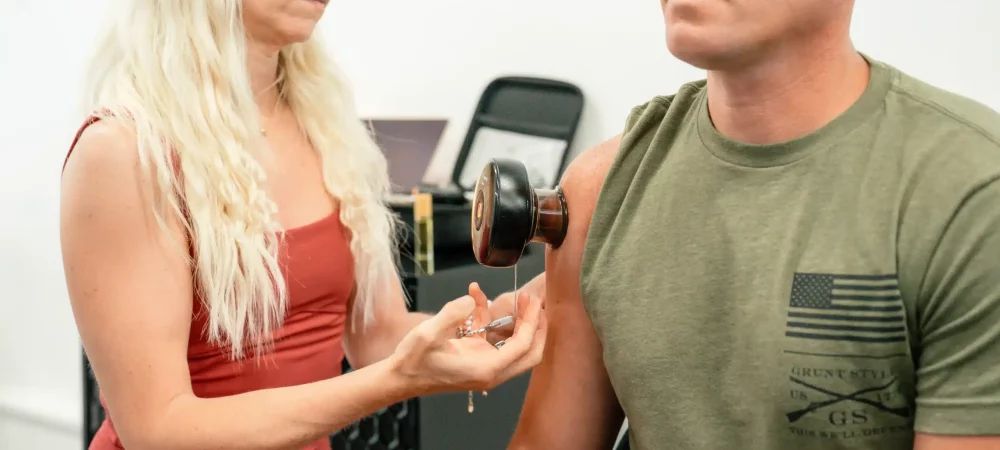
- Combined with Cupping Therapy Cupping creates suction that increases blood flow and helps release fascial restrictions. When combined with needling, it accelerates the healing process and reduces recovery time.
- Red Light Therapy Enhancement Special wavelengths of light penetrate tissues to reduce inflammation, promote healing, and decrease pain. This addition helps your body recover more quickly between sessions.
What Makes This Treatment Special
Dry needling gets results when other treatments have failed because it works at the cellular level. The needle creates a micro-injury that triggers your body’s natural healing response, bringing fresh blood flow and nutrients to areas that have been stuck.
Most people notice improvement within 24-48 hours after treatment. Some feel immediate relief, while others experience gradual improvement over the following days as inflammation decreases and normal muscle function returns.